Rebels failed in their last attempt to seize the capital in 2006. Their leaders include high-level officials who have defected to the rebel ranks in recent years. They accuse Deby of favouring his family and Zaghawa clan group in power. Déby has faced at least two coup attempts. Hissène Habré conquered the capital in 1982 and the Libyan occupation of the Aouzou Strip in the north ended when Qaddafi's forces were defeated in 1987 with the support of France and the USA.
In 1989, Idriss Déby, one of Habré's leading generals and a member of the Zaghawa tribe, defected and fled to Darfur in Sudan, from which he mounted a series of attacks on Habré (of the Gorane tribe). Idriss Deby came to power in 1990 after toppling Chadian President Hissene Habre - with the help of the French secret service. In December 1990, Déby’s forces successfully marched on N’Djamena with Libyan assistance and seized power. During the next few years, and government forces clashed violently with rebel forces. Finally, Déby won the country’s first two multi-party presidential elections in 1996 and in 2001.
Mr. Déby planned his insurgency while living in Darfur, just as Mr. Habré before him seized power from a base in Darfur.
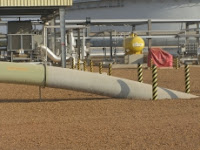
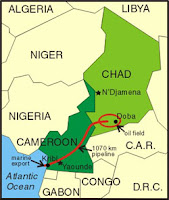
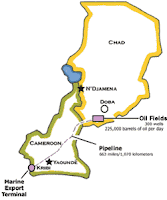
Landlocked Chad became an oil exporter in 2003 with the completion of a $3.7 billion (1.88 billion pound) pipeline linking its oilfields to terminals on the Atlantic coast.
The Doba pipeline, operated by Exxon Mobil with partners Chevron Corp and Malaysia's state run Petronas, pumps around 160,000 barrels a day through Cameroon to the Gulf of Guinea.
Last September, Chad's national oil refiner signed a joint venture deal with China National Petroleum Corporation (CNPC), parent of PetroChina and China's largest oil and gas producer.
PetroChina says it has found at least 100 million tonnes of oil at a new project in Chad.
China agreed to provide preferential loans to Chad and offer facilities for water and power supplies, the China Daily newspaper reported.
hereRegionally Idriss Deby, a former French- trained helicopter pilot, has been increasingly viewed with mistrust, and he fell out of favour with Chad's former colonial master France over drilling rights in the 1990s. French Defence Minister Herve Morin said on Saturday France had a "neutral" military position in the conflict in Chad between the government and rebel troops, who have battled their way into the capital N'Djamena."We continue to remain neutral in this combat," Morin told France 3 television. "No ceasefire has been agreed," officials at France's Foreign Ministry and Defence Ministry said.

Many rebels have ties to past regimes in Chad. The leaders of the Chadian rebels include Timane Erdimi, a former member of Deby's ruling clan, and Mahamat Nouri, a former defence minister. They say Deby favors his family, the Zaghawa clan group and friends. "Nobody is going to miss Deby, but these guys aren't exactly fighting for freedom and democracy," Brody told the Times.
In 1999, the Exxon Consortium (consisting of ExxonMobil, Petronas and ChevronTexaco) had to relinquish most of the acreage surrounding the Doba-Doseo basins area in the Republic of Chad. Initially, the consortium had plans to explore this vast concession.
In the same year, Cliveden Petroleum Chad was granted the entire Permit “H” area surrendered by Exxon and set up an office in N'Djamena. This concession includes the Doba, Doseo, Salamat and Bongor basins as well as Lake Chad and is 268,240 km2. It also includes the Erdis area of a further 171,000 km2 on the border with Libya. As a result of acquiring this concession, Cliveden Petroleum Chad became the only title-owner of the so-called Lake Chad, Chari and Erdis permits comprising a total of 439,240 km2. For comparison purposes, this concession is almost equal in size to the State of Texas or the size of France.

At the end of 2003, the Cliveden Petroleum Chad sold a 50% shareholding to two major Chinese organizations. The Chinese National Petroleum Corporation (CNPC) and CITIC each bought 25% of Cliveden Petroleum Chad. CNPC is one of the world's leading integrated energy companies. Its operations cover a broad spectrum of upstream and downstream activities, field operations and technical services, and equipment manufacturing and supply.
CNPC serves as China's largest producer and supplier of crude oil and natural gas, holding a dominant position in domestic petroleum production, processing, and marketing sectors. At the same time, CNPC is also a major producer and supplier of refined oil products and petrochemicals.
As one of the largest service suppliers in the global petroleum and petrochemical industries, CNPC can provide operational services and technical support in such areas as geophysical prospecting, well drilling, logging, well testing, down hole operations, oilfield surface facilities construction, pipeline construction, refining and petrochemical projects, and manufacturing and supply of petroleum equipment.
CITIC is a window on China's opening to the outside world. Since its inception, CITIC has always adhered to the principle of innovation. In line with government laws, regulations and policies, CITIC has attracted and utilized foreign capital, introduced advanced technologies, and adopted advanced and scientific international practice in operation and management. In the light of the law of economy, CITIC has made explorations in many business fields with remarkable success and has achieved good economic results. By doing so, CITIC has made significant contributions to the country's reform and opening up drive and established good reputation both domestically and abroad.